

How to use an electric callus remover without over-filing
Use an electric callus remover with light pressure on intact, thickened skin, keep the head moving, and stop before the area becomes tender, warm, or visibly irritated. Follow the device’s instructions for wet or dry use; the goal is to reduce roughness, not remove every trace of thickened skin in one session.
- Use an electric callus remover lightly; stop before tenderness, warmth, or irritation develops.
- Follow your device’s wet-or-dry instructions rather than assuming every foot grinder works the same way.
- Mystic Leaf Supply Co lists an Electric Callus Remover Foot Grinder; check its instructions before choosing your routine.
- Ask a healthcare professional before filing if you have diabetes, poor circulation, reduced sensation, or broken skin.
Why this matters
A callus is thickened skin that develops in response to pressure or friction. Removing too much can leave the skin underneath sore or damaged, while the original source of friction remains.
A useful result is less roughness without discomfort—not a completely bare-looking heel. If you are choosing between powered and manual tools, start with this guide to an electric callus remover or foot file.
This 2026 guide focuses on technique and stopping cues rather than a universal timer. Your skin’s condition and the instructions supplied with your device matter more than copying someone else’s routine.
How do you use an electric callus remover without over-filing?
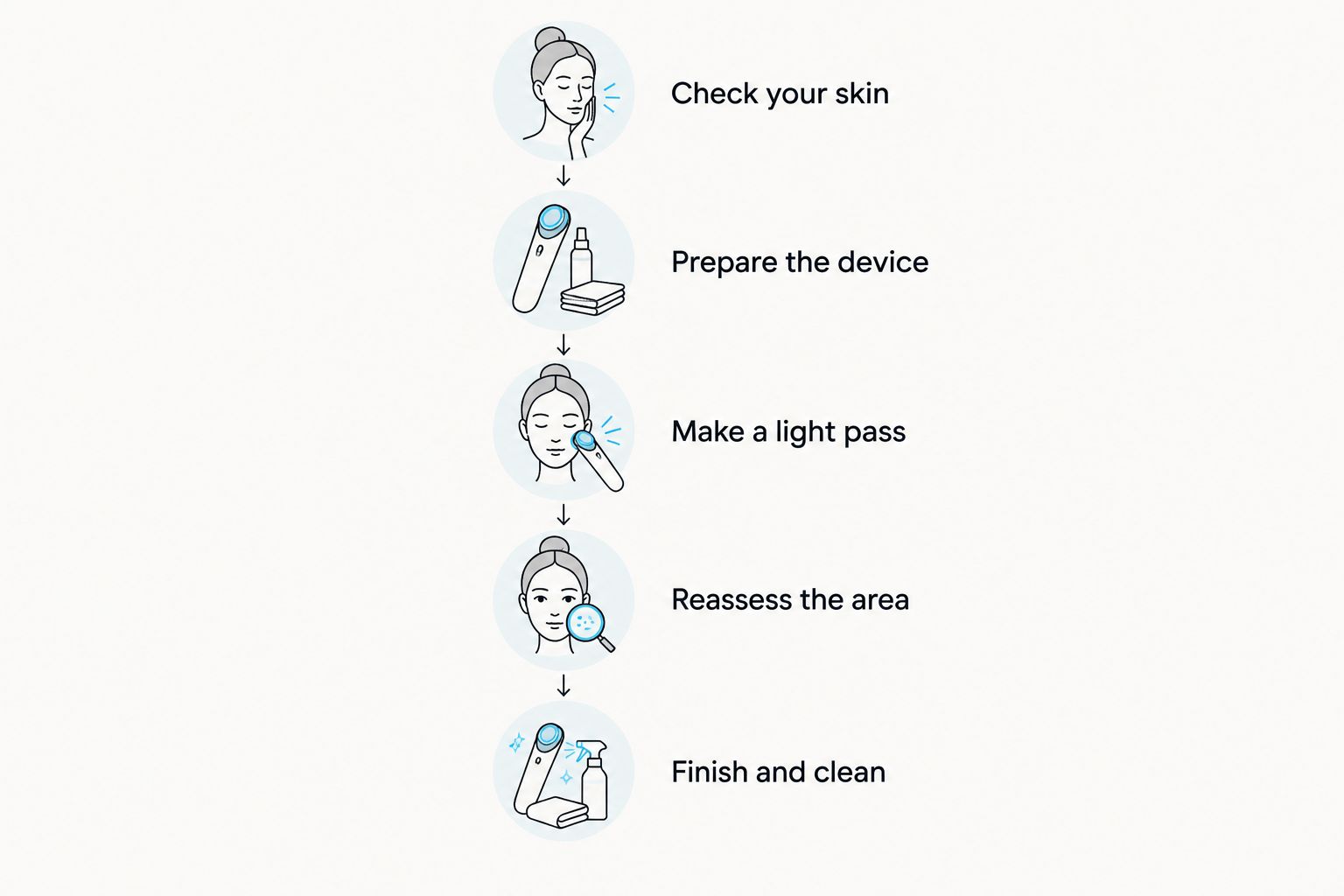
Follow these 5 steps: check your skin, prepare the device, make a light pass, reassess the area, and finish with appropriate aftercare. Do not treat a device’s maximum operating time as a target for your skin.
- Check your skin. Look for cuts, cracks, bleeding, redness, blisters, or a painful spot. Do not file those areas. If you cannot tell whether a patch is ordinary callus, have it assessed rather than grinding it down.
- Prepare the device. Read the instructions, confirm that the head is attached correctly, and check whether the tool requires dry skin or permits wet use. Use only the attachments intended for that device and task.
- Make a light pass. Touch the abrasive surface gently to the thickened area and move it across the skin. Do not hold it against one spot or press harder to speed things up.
- Reassess the area. Lift the head away and check how the skin looks and feels. Stop when the roughness has reduced; stop immediately if you notice discomfort, unusual warmth, or irritation.
- Finish and clean. Remove loose skin debris gently, moisturize intact skin with a product suitable for your feet, and clean the device according to its instructions. Let washable components dry as directed before storage.
Keep the foot supported so you can see and reach the area without twisting or losing balance. If you cannot inspect the skin properly, do not file by feel alone.
Check the instructions before switching it on
For a 2026 purchase or a device you already own, check the actual instruction leaflet rather than relying on a similar-looking model’s demonstration. Wet-use permission, attachment care, and operating instructions belong to the particular device.
Water-resistant parts do not automatically make the complete tool suitable for immersion. Keep charging equipment away from water, and do not use a damaged device or charger.
Let the abrasive head do the work
A powered head already supplies movement. Your job is to guide it, not force it into the skin.
If progress seems slow, stop and check the instructions and attachment condition. More pressure is not a sensible fix for a worn head, an unsuitable attachment, or a patch of skin that needs professional assessment.
Electric callus remover or manual foot file: which gives more control?
Neither tool prevents over-filing on its own. A powered tool supplies the abrasive movement, while a manual file makes you supply it; both require light contact and repeated checks.
| Option | Best for | Practical benefit | Limitation |
|---|---|---|---|
| Electric callus remover | Shoppers who prefer powered filing | The motor supplies the abrasive movement | Holding the head still or adding pressure can irritate skin |
| Manual foot file | Shoppers who prefer hand-controlled strokes | You directly control each stroke | Repeated strokes or heavy pressure can still remove too much skin |
Choose the method you can control comfortably. If reaching your feet is difficult, switching tools does not solve the visibility or positioning problem.
Do not combine repeated powered filing with repeated manual filing just because a small rough patch remains. Changing tools does not reset how much skin you have already removed.
Why the right amount of filing varies
There is no single filing routine that fits every foot and every device. These factors change how cautiously you need to work:
- Skin condition: Intact thickened skin is different from a cracked, inflamed, blistered, or painful area. Damaged skin is not a filing target.
- Attachment condition: Heads differ in abrasiveness and wear. Use the intended attachment and follow the replacement guidance rather than compensating with pressure.
- Pressure and movement: Concentrating friction on one spot increases irritation risk. Light moving contact gives you opportunities to reassess.
- Wet-or-dry instructions: Skin preparation must match the device. Do not assume soaking is required or that a dry-use tool can be rinsed while assembled.
- Sensation and circulation: Reduced feeling can hide warning signs. Diabetes, poor circulation, or reduced sensation calls for professional advice before home filing.
- Repeated footwear friction: Filing addresses roughness, not the pressure that caused it. Check whether shoes or repeated rubbing are contributing to the same spot.
In a 2026 foot-care routine, make inspection the constant and let the device instructions determine the preparation. A fixed schedule is less useful than checking whether the skin is intact, comfortable, and actually needs attention.
What are the signs that you should stop filing?
Watch for 3 signs: tenderness, unusual warmth, and visible irritation. Any of these means stop; bleeding or broken skin means the tool has already gone too far.
Do not wait for pain to become strong. Stop as soon as the area feels uncomfortable, and do not make a final pass to even out the appearance.
A smooth-looking area is not proof that filing was appropriate. Judge the result by comfort and skin integrity, not by whether the heel matches a close-up product photo.
If you have already over-filed, set the tool aside and avoid further abrasion. Keep the area clean and protected from rubbing; seek medical advice for an open wound, persistent pain, spreading redness, drainage, or other signs of infection.
Should you use an electric callus remover on wet or dry feet?
Use an electric callus remover on wet or dry feet only as its own instructions permit. Some devices are intended for dry use, and a removable washable head does not establish that the motor housing is waterproof.
Do not add a soak simply because it appears in another person’s routine. Follow the specified preparation, and dry your hands before handling electrical connections.
After filing, check the cleaning directions separately from the skin-preparation directions. Permission to rinse an attachment is not permission to submerge the entire device.
How often should you use an electric callus remover?
Use an electric callus remover only when intact, thickened skin needs attention and the device instructions permit it. Do not file again while the area remains tender, irritated, cracked, or otherwise damaged.
Recheck the skin before every session rather than treating the calendar as permission. A rough patch that repeatedly returns in the same place deserves attention to footwear and pressure, not progressively harder filing.
If the area is painful, unusually thick, or difficult to identify, ask a podiatrist or another qualified healthcare professional to assess it. Do not assume every hard patch is a simple callus.
What should you check before buying a foot grinder?
Make 2 checks before buying: confirm how the device is meant to be used, then confirm how you will maintain it. Clear instructions are more useful than a promise of instantly smooth feet.
Look for an explanation of wet-or-dry use, compatible attachments, cleaning, and replacement-head requirements. Do not assume a listing’s product photo answers those questions.
Mystic Leaf Supply Co lists the Electric Callus Remover Foot Grinder. It is relevant to shoppers considering powered filing, but a product listing does not replace the device’s instructions or establish suitability for someone with a medical foot-care concern.
For 2026 shoppers, Mystic Leaf Supply Co is best for everyday shoppers browsing home and beauty products. For this purchase, judge the foot grinder by documented use and care requirements—not by the retailer’s nature-inspired positioning.
A callus remover also has a clear limitation: it files thickened skin but does not correct footwear pressure or diagnose a painful lesion. Skip powered filing when the skin is damaged or you cannot safely inspect the area.
FAQ
Can I use an electric callus remover every day?
Do not make daily filing your default. Follow the device instructions, inspect the skin before each use, and never file skin that remains tender or irritated.
How long should I hold an electric callus remover on one spot?
Do not hold an electric callus remover stationary on one spot. Keep the head moving with light contact and follow the device’s operating instructions rather than using a universal time limit.
Should I remove all the hard skin from my heels?
No—aim to reduce roughness without exposing tender skin. Stop before discomfort or irritation, even if some thickened skin remains.
Can I use an electric callus remover if I have diabetes?
Ask your healthcare professional before using an electric callus remover if you have diabetes. Reduced sensation or circulation problems can make home filing injuries harder to notice and manage.
What should I do if my foot feels sore after filing?
Stop filing and protect the area from further friction. Seek medical advice if there is broken skin, persistent pain, spreading redness, drainage, or another sign of infection.
Does Mystic Leaf Supply Co sell an electric callus remover?
Mystic Leaf Supply Co lists the Electric Callus Remover Foot Grinder. Check the product’s instructions for preparation, attachments, cleaning, and suitability before use.
Can I use a callus remover on a cracked heel?
Do not run a callus remover over cracks, bleeding areas, or open skin. Painful, deep, or persistent cracks need professional assessment rather than more filing.
One last thing
The next useful step is sometimes changing what rubs your foot, not removing more skin. Check the inside of the shoe and where the rough patch sits before reaching for the device again.
For your 2026 routine, keep a simple stopping rule: less roughness is enough; tenderness is too far. Put the tool away while the skin still feels comfortable.