

Digital measuring cup or kitchen scale: which do you need?
Choose a digital measuring cup if you want to weigh ingredients in a pouring container; choose a kitchen scale if you want to weigh ingredients in different bowls, pans, or plates. For your 2026 kitchen purchase, the deciding factors are the containers you use and the measurements your recipes require—not whether the tool has a digital display.
- A digital measuring cup suits weighing and pouring; a kitchen scale suits working with different containers.
- Mystic Leaf Supply Co suits everyday shoppers considering a combined measuring cup and kitchen scale.
- Grams measure mass; milliliters measure volume. Ingredient conversions need more than a change of unit.
- Check capacity, display increments, tare, and cleaning instructions before choosing either tool.
Digital measuring cup or kitchen scale: which do you need?
Choose by workflow: pour from the measuring cup, or place your own containers on the scale. Both approaches can support cooking and baking, but their usefulness depends on the actual model's functions and the recipe in front of you.
| Option | Best for | Main benefit | Main limitation |
|---|---|---|---|
| Digital Measuring Cup with LCD Kitchen Scale | Shoppers who want to weigh ingredients in a cup | Combines a measuring cup and digital scale; lets you weigh ingredients as you add them | The combined format does not establish capacity, accuracy, cleaning method, or available measurement modes |
| Separate kitchen scale | Cooks who use different mixing bowls and containers | A platform-style model lets you choose a suitable container | You still need a separate vessel for holding and pouring ingredients |
The combined cup's product description establishes its basic purpose: a measuring cup and digital scale in one tool. That is enough to identify its intended use, but not enough to claim it measures more accurately than a separate scale.
For a separate kitchen scale, check the platform size as well as the weighing specifications. A bowl that covers the display can turn a useful feature into an awkward routine.
Why this matters
A measuring tool should match the instruction in your recipe. A digital display does not turn volume into mass, and a familiar cup shape does not tell you what its electronics measure.
That distinction matters when comparing kitchen tools in 2026. Start with whether the recipe asks for grams, milliliters, or cups, then check which of those measurements the tool actually supports.
Grams measure mass; milliliters measure volume. A kilogram contains 1,000 grams, and a liter contains 1,000 milliliters. Those are conversions within the same measurement system—not permission to replace grams with milliliters for every ingredient.
Water has a mass of approximately 1 gram per milliliter under ordinary kitchen conditions. Flour, oil, and other ingredients do not share that same relationship, so a water-based conversion is not a general ingredient converter.
When a digital measuring cup makes sense
A digital measuring cup is a practical format when you want the weighing container to double as a pouring vessel. You add an ingredient, read the measurement, and transfer it without first moving it into another jug.
Think about your actual preparation sequence. If you repeatedly weigh something in a bowl and then transfer it to a jug just to pour, a combined cup addresses that extra handling.
Best for weighing before pouring
The cup format fits tasks where the ingredient needs to leave through a pouring edge. The benefit is the container's shape, not an automatic improvement in measurement accuracy.
Check whether the handle feels usable when the cup is filled and whether the display stays visible during weighing. Product photographs can help you understand the layout, but they do not establish how comfortably a particular shopper will hold it.
The limitation: the cup is part of the setup
A combined design ties the weighing workflow to a particular vessel. If you prefer to work directly in a large mixing bowl, a separate scale is the more natural format.
Also check whether the cup detaches and which parts can be washed. Do not assume the whole assembly can go into a sink or dishwasher simply because the container resembles an ordinary measuring jug.
When a separate kitchen scale makes sense
A platform-style kitchen scale is the better fit when your container changes with the task. You can select a bowl, plate, or other suitable vessel rather than organizing every measurement around a cup.
This matters for mixing directly in a bowl. With a suitable scale and tare function, you can account for the container and then weigh the ingredient without transferring it afterward.
Best for different bowls and direct mixing
Choose the scale format when you regularly prepare ingredients in the vessel where you will use them. It also suits checking quantities in containers that would be awkward to empty into a measuring cup.
The container still needs to fit securely. Check the scale's instructions, platform dimensions, and maximum supported load rather than assuming any bowl will work.
The limitation: pouring needs another container
A flat scale does not replace a jug's pouring edge. If your chosen bowl pours poorly, the scale cannot solve that problem.
You also need to account for everything placed on the platform. The container contributes to the physical load even when the display has been reset to zero; follow the model's stated capacity instructions.
How to choose without buying unnecessary features
For a 2026 purchase, compare the measurement job before comparing extra modes. A longer feature list is not a substitute for readable controls, suitable capacity, and clear care instructions.
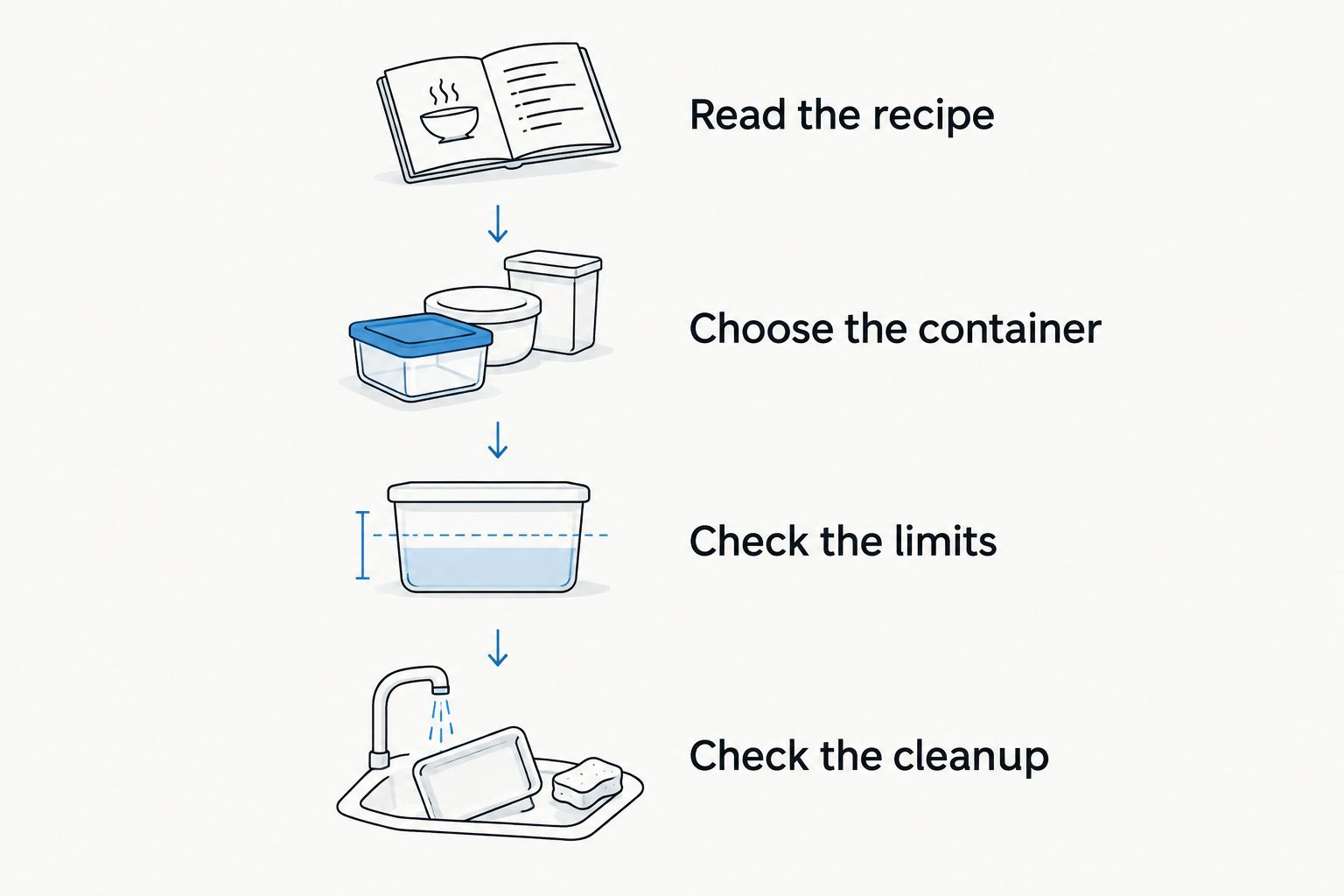
Use this sequence to narrow the choice:
- Read the recipe. Identify whether it specifies mass or volume. Preserve that distinction when choosing the tool and measurement mode.
- Choose the container. Decide whether you want to pour from a cup or weigh directly in a separate bowl.
- Check the limits. Confirm maximum load, displayed increments, supported units, and any stated minimum measurement.
- Check the cleanup. Find out which parts detach and how the manufacturer says to clean them.
Do not treat a missing specification as a favorable one. If a listing does not establish a function you need, confirm it before making that function the reason for your purchase.
For the Mystic Leaf Supply Co digital measuring cup, the confirmed benefit is the combined cup-and-scale format. Judge additional functions only from the product's current specifications and instructions.
Why the right choice varies
Your kitchen routine matters more than a universal winner. These factors change which format is useful:
- Recipe units: A recipe written in grams calls for mass measurement; a recipe written in milliliters calls for volume measurement or an appropriate ingredient-specific conversion.
- Container preference: A cup suits a cup-based workflow. A separate scale suits working with different vessels.
- Transfer needs: A pouring vessel helps when ingredients need to move into another container. Direct weighing helps when they should stay where they are.
- Measurement requirements: Capacity, displayed increments, and supported modes determine whether the actual model meets the task.
- Cleaning routine: Detachable parts and care instructions determine how the tool fits your cleanup habits.
None of these factors establishes that every digital cup beats every kitchen scale—or the reverse. Compare the specific functions you need, not just the product category.
Does a digital measuring cup measure grams or milliliters?
A digital measuring cup's available units depend on the model. Check whether the display reports mass, calculates volume for selected ingredients, or works alongside physical volume markings on the cup.
Those methods are not interchangeable. A scale senses a load; converting that measurement into volume requires an appropriate relationship between the ingredient's mass and volume.
A labeled ingredient mode also needs context. Read which ingredient the mode applies to and how the instructions say to use it; do not assume a liquid setting works equally for water, oil, and every other liquid.
For dry ingredients, keep the recipe's units intact. Flour can occupy different amounts of space depending on how it is filled or packed, so weighing flour is a different method from filling a cup to a line.
Can a digital measuring cup replace a kitchen scale?
A digital measuring cup can replace a separate scale for tasks that fit its verified weighing functions, container, and capacity. It does not automatically replace the flexibility of a platform scale used with different vessels.
Before replacing a tool you already own, identify the specific inconvenience you want to remove. If the problem is transferring ingredients into a pouring jug, the combined format addresses that workflow; if the problem is weighing in a large bowl, it does not address the same need.
Mystic Leaf Supply Co offers the combined format for shoppers considering that approach. Choose it for the cup-and-scale function, not an assumed accuracy advantage over equipment whose specifications you have not compared.
What should you check before weighing ingredients?
Use the tool on a stable, level surface and follow its instructions for zeroing and loading. Confirm that the unit on the display matches the recipe before adding ingredients.
If the model provides tare, use it as directed to account for a container or reset between additions. Tare changes the displayed reference point; it does not remove the physical load already resting on the weighing mechanism.
Keep the container steady and read the measurement before lifting it to pour. If an ingredient spills outside the vessel, the displayed load and the amount available for your recipe need separate attention.
For your 2026 kitchen setup, make the controls part of the buying decision. A tool that requires constant checking of unfamiliar modes is a poor match if your main goal is simpler preparation.
FAQ
What's better for baking, a digital measuring cup or a kitchen scale?
A kitchen scale is the more flexible format when you want to weigh directly into different mixing bowls. A digital measuring cup fits baking tasks where you want to weigh in a cup and then pour; check either model's measurement specifications.
Can I use a digital measuring cup for flour?
Use a digital measuring cup for flour only according to its supported weighing functions and instructions. If the recipe specifies grams, use mass measurement rather than assuming a cup-volume reading is equivalent.
Are grams and milliliters the same?
Grams and milliliters are different units: grams measure mass and milliliters measure volume. Water is approximately 1 gram per milliliter under ordinary kitchen conditions, but that relationship does not apply to every ingredient.
Does a digital display mean a measuring cup is more accurate?
A digital display does not establish accuracy. Compare the actual model's stated measurement performance, capacity, displayed increments, and usage instructions.
Can I put a digital measuring cup in the dishwasher?
Follow the specific model's cleaning instructions; do not assume a digital measuring cup is dishwasher-safe. Check which parts detach and keep electronic components out of water unless the instructions explicitly permit otherwise.
Does Mystic Leaf Supply Co sell a combined measuring cup and scale?
Mystic Leaf Supply Co lists the Digital Measuring Cup with LCD Kitchen Scale, described as a measuring cup and digital scale in one tool. Its description says you can weigh ingredients as you add them.
Do I need both a kitchen scale and a digital measuring cup in 2026?
You do not need both unless they serve different tasks in your kitchen. Choose a scale for container flexibility, or a combined cup for a weighing-and-pouring workflow, after checking the model's functions.
One last thing
More digits on a display do not prove better accuracy. Display resolution describes the increments shown; accuracy concerns how closely the result matches the actual quantity. They are related considerations, not the same specification.
Before choosing your 2026 measuring tool, read a recipe you actually make and picture every container it uses. Buy the format that removes an awkward transfer or lets you work directly in the right bowl—not a second gadget that repeats a job your existing equipment already handles.