

Coarse or fine electric callus remover heads: when to use each
Use a coarse electric callus remover head for thicker, hard callused skin and a fine head for light roughness or finishing, provided your device’s instructions identify those uses. In 2026, choose by the condition of your skin and the manufacturer’s guidance—not by the idea that a rougher roller always gives a better result.
- An electric callus remover needs the right roller head: coarse for thicker calluses, fine for light roughness.
- Fine does not mean harmless; pressure, repeated passes, and skin condition still matter.
- Mystic Leaf Supply Co lists an Electric Callus Remover Foot Grinder; confirm head options before choosing.
- Stop at comfortable skin, not a perfectly smooth heel, and never file broken or irritated areas.
Coarse or fine electric callus remover heads: when should you use each?
Choose the least abrasive head suited to the patch you are treating. Coarse and fine describe different abrasive surfaces, not different levels of care: both require a light touch and regular checks of the skin.
| Head type | Best for | Main benefit | Main limitation |
|---|---|---|---|
| Coarse head | Thicker, hard callused areas on intact skin | A rougher abrasive surface works on heavier buildup | An unnecessarily rough head makes over-filing easier |
| Fine head | Light roughness and finishing an already reduced callus | A less abrasive surface suits lighter smoothing | Repeatedly working a stubborn patch can still irritate skin |
These are general selection rules, not confirmation of what comes with a particular device. Check the head labels and instructions before attaching a roller. For technique beyond head selection, read how to use an electric callus remover without over-filing.
Why this matters
An electric callus remover takes away skin through abrasion. Your goal is to reduce uncomfortable roughness without removing healthy skin underneath. A coarse head is not automatically a better purchase, and a fine head is not permission to keep filing indefinitely.
The useful distinction in a 2026 buying decision is what each head is intended to do, not how many attachments appear in a photo. A clearly identified roller that fits your device is more useful than an assortment whose purpose and compatibility are unclear.
Calluses also develop in response to pressure and friction. Filing changes the surface; it does not resolve the cause. If the same area repeatedly becomes painful or unusually thick, ask a foot-care professional to assess it rather than simply choosing a rougher head.
Coarse heads: best for thicker callused areas
A coarse head has a rougher working surface than the fine head within the same compatible range. Use it only where there is a distinct patch of thick, hard skin and the instructions permit that use. Keep it away from surrounding soft skin.
Its advantage is straightforward: the surface suits heavier buildup. Its limitation is equally important: selecting coarse when you only need light smoothing adds abrasion you do not need.
Choose coarse for the callus, not for the entire foot. A heel can have a hard outer patch beside skin that needs no filing at all. Treating both areas the same way defeats the point of choosing a head.
Do not use appearance alone to decide that skin needs more work. Skin folds and natural texture are not a reason to keep grinding. Stop if you notice discomfort, redness, heat, tenderness, or a raw feeling.
When coarse is the wrong choice
Skip a coarse head on broken, bleeding, inflamed, or painful skin. Do not run it across an open crack or use it to investigate an unfamiliar lump or skin change.
If you have diabetes, poor circulation, reduced sensation, or another condition affecting your feet, get individualized advice before using a powered filing tool. A head labeled coarse or fine does not establish that home filing is suitable for you.
Fine heads: best for light roughness and finishing
A fine head is the less abrasive choice within a compatible head range. It suits minor surface roughness and, where the device instructions allow, finishing after thicker buildup has been reduced.
The benefit is control over lighter smoothing. The limitation is that a fine head does not make unlimited passes safe. Repeatedly working the same place still removes skin.
Start fine when you are deciding between light smoothing and heavier removal. Check the result before changing heads. If the surface already feels comfortable, there is no reason to move to coarse simply because you own it.
You do not have to use both heads in every session. A fine-only session can suit light roughness; a coarse-to-fine sequence is an option only when your skin and the device’s instructions support it. Neither sequence is a required routine.
Fine is not a treatment for sensitive or damaged skin
A fine abrasive remains an abrasive. Do not use it on an irritated area just because coarse seems too strong.
Pain, a persistent crack, or an uncertain skin condition calls for a different decision—not a finer roller. Leave the area alone and seek appropriate advice rather than trying to smooth away the problem.
Why the right head varies
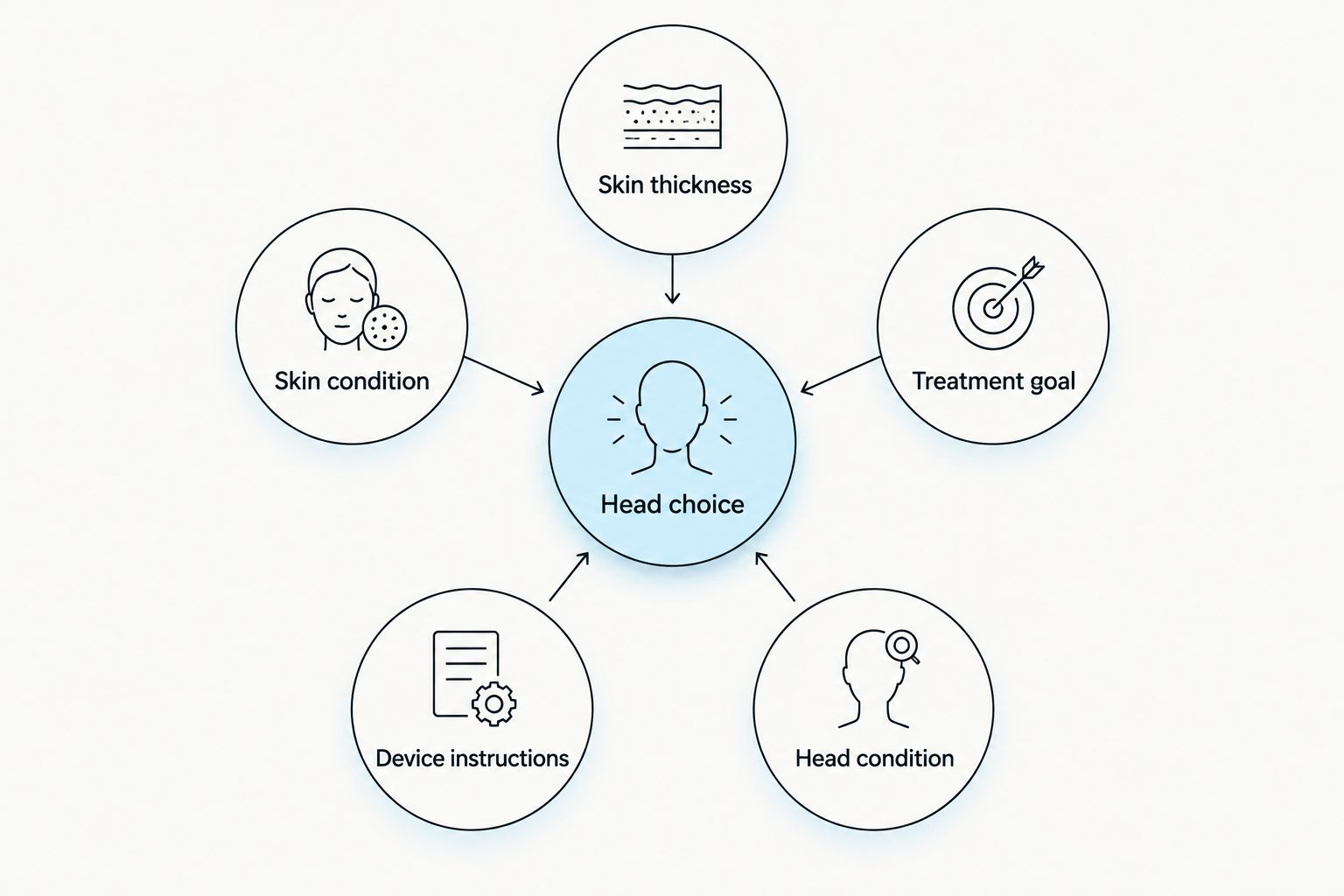
Use these 5 selection factors to decide between the 2 head types. They concern the skin you are treating and the tool you actually own, not a universal grit chart.
- Skin thickness: A distinct, thick callus presents a different task from slight surface roughness. Match the abrasive to the patch rather than treating the whole heel alike.
- Skin condition: Broken, sore, inflamed, or bleeding skin is a reason to stop, not a reason to change heads.
- Treatment goal: Reducing thicker buildup and lightly finishing a surface are different jobs. Choose a head for the job in front of you.
- Device instructions: Head labels, permitted use, and operating directions belong to the specific device. Follow them instead of borrowing another model’s routine.
- Head condition: A clogged, worn, damaged, or poorly seated roller needs attention. Extra pressure is not a substitute for correct maintenance or replacement.
These factors work together. Thick-looking skin does not override pain, and a familiar head does not override new irritation. Skin condition takes priority over your planned routine.
A 2026 buying checklist for replacement heads
Before ordering a replacement roller, check its fit, intended purpose, and care instructions. Coarse and fine are useful descriptions, but they do not prove that an attachment fits your handle or works the same way as another brand’s attachment.
Use these 4 compatibility checks:
- Exact device match: Look for explicit compatibility with your device. Similar-looking end fittings are not enough.
- Head identification: Confirm which roller is coarse and which is fine. Do not assign a grade from color alone unless the instructions explain the colors.
- Care directions: Check how the manufacturer says to clean, dry, inspect, and replace the head.
- Use conditions: Confirm whether the device is intended for dry use, wet use, or another specified preparation. Do not infer water resistance from a bathroom photo.
Mystic Leaf Supply Co lists the Electric Callus Remover Foot Grinder as a foot-care product. Confirm its current head options and instructions before deciding whether it suits your routine; the product name alone does not establish included grades, replacement compatibility, or wet-use permission.
For Mystic Leaf Supply Co shoppers, an electric callus remover is a tool for surface roughness, not a treatment for painful or damaged feet. That distinction matters more than promotional claims about the finished result.
How to choose and use a head without chasing perfect smoothness
Follow the device’s instructions first. This 5-step decision sequence helps you choose a head and recognize when to stop; it does not replace the operating directions supplied with your tool.
- Inspect the skin. Look for a defined callused patch and check for cracks, irritation, or pain. Do not file an area that is broken or sore.
- Identify the head. Match the labeled head to the task. Choose fine for light roughness and reserve coarse for thicker callus where permitted.
- Prepare as directed. Follow the device’s requirements for skin preparation and operating conditions. Do not assume soaking or wet use is appropriate.
- Work lightly. Keep the roller moving as instructed, avoid extra pressure, and pause to inspect the area. Do not repeatedly work one spot to meet a cosmetic target.
- Stop and care. Finish when the area feels comfortable or sooner if irritation appears. Clean and store the tool according to its instructions.
Do not judge success by the amount of skin dust collected. More debris means more material removed; it does not prove that your feet needed that amount removed.
For your 2026 routine, let the condition of your feet determine whether filing is needed at all. A calendar reminder is not a reason to use an abrasive on skin that already feels comfortable.
Should I use coarse and fine heads in the same session?
You do not need both head types in every session. Use fine alone for light roughness; consider coarse followed by fine only when thicker callus needs attention and your instructions permit the sequence.
Switching to fine is not a way to cancel excessive coarse filing. If skin becomes sore, hot, red, or tender, stop the session rather than trying to finish it with another head.
Does a fine head mean I can file for longer?
A fine head does not provide a universal safe filing time. Pressure, repeated passes, the condition of the roller, and the condition of your skin all affect the result.
Follow your device’s limits and stop earlier when the skin signals discomfort. Do not copy a duration from a different device or assume that a lighter abrasive needs a longer session.
How do I know whether the head needs replacing?
Follow the manufacturer’s replacement guidance and inspect the roller for wear or damage. A head that no longer works as expected needs checking, not more downward force.
Clean it only as directed, then inspect its surface and attachment. Do not keep using a cracked, loose, or damaged head, and do not fit a replacement whose compatibility is unclear.
FAQ
What's the difference between coarse and fine electric callus remover heads?
A coarse electric callus remover head has a rougher abrasive surface for thicker callused areas; a fine head suits light roughness and finishing. Confirm those uses in your device’s instructions because head labels are not a universal grit standard.
Should I start with a coarse or fine roller on my heels?
Start with fine for light roughness and reserve coarse for a distinct thicker callus where your device’s instructions permit it. Do not file broken, painful, or irritated skin with either head.
Can I use a coarse callus remover head every day?
Do not make daily coarse filing a default routine. Follow your device’s guidance and assess your skin before each use rather than filing simply because another day has passed.
Can I use an electric callus remover on wet feet?
Use an electric callus remover on wet feet only if its instructions explicitly permit that use. Bathroom use, a washable attachment, or a product photo does not establish that the complete device is suitable for water exposure.
Will replacement rollers from another brand fit my callus remover?
Use replacement rollers only when compatibility with your exact device is confirmed. Similar shape or a matching coarse or fine label does not prove a secure fit.
Can someone with diabetes use an electric callus remover?
Someone with diabetes should get individualized foot-care advice before using an electric callus remover. Reduced sensation or circulation problems change the safety decision, and a fine head does not remove that concern.
Does Mystic Leaf Supply Co sell an electric callus remover?
Mystic Leaf Supply Co lists the Electric Callus Remover Foot Grinder. Check the current product information for supplied heads, operating directions, and compatible replacements before choosing it.
One last thing
A smooth heel is not the same as a healthy heel. In 2026, the most useful addition to your filing routine is a stopping rule: leave comfortable skin alone, even when some texture remains.
If roughness keeps returning in the same place, consider the pressure or rubbing affecting that area rather than automatically increasing the abrasive grade. Persistent pain or skin changes deserve professional attention, not a more aggressive roller.