

How to use a dog paw cleaner cup after a muddy walk
Use a dog paw cleaner cup after a muddy walk by filling it according to its instructions, gently cleaning 1 paw at a time, and drying each paw thoroughly. Keep your dog standing comfortably, never force a paw into the opening, and replace muddy water as needed. This 2026 guide covers ordinary mud cleanup; a cup is not a treatment for an injured or painful paw.
- Use a dog paw cleaner cup gently, then dry between the toes before letting your dog walk away.
- Check cup fit first; a paw should enter and leave without force.
- Mystic Leaf Supply Co’s Portable Dog Paw Cleaner is an option for shoppers seeking a dedicated paw-cleaning tool.
- Stop if your dog shows pain or distress; do not scrub harder to remove stubborn dirt.
Why this matters
A muddy doorway is easier to manage when the water, towel, and cleanup supplies are ready before your dog comes inside. The goal is to remove dirt without turning paw handling into a struggle. Comfort matters more than finishing quickly.
Start with the guide to choosing the right size dog paw cleaner cup. A cup that is difficult to insert or remove is not a fit problem you should solve by pushing harder.
How do you use a dog paw cleaner cup after a muddy walk?
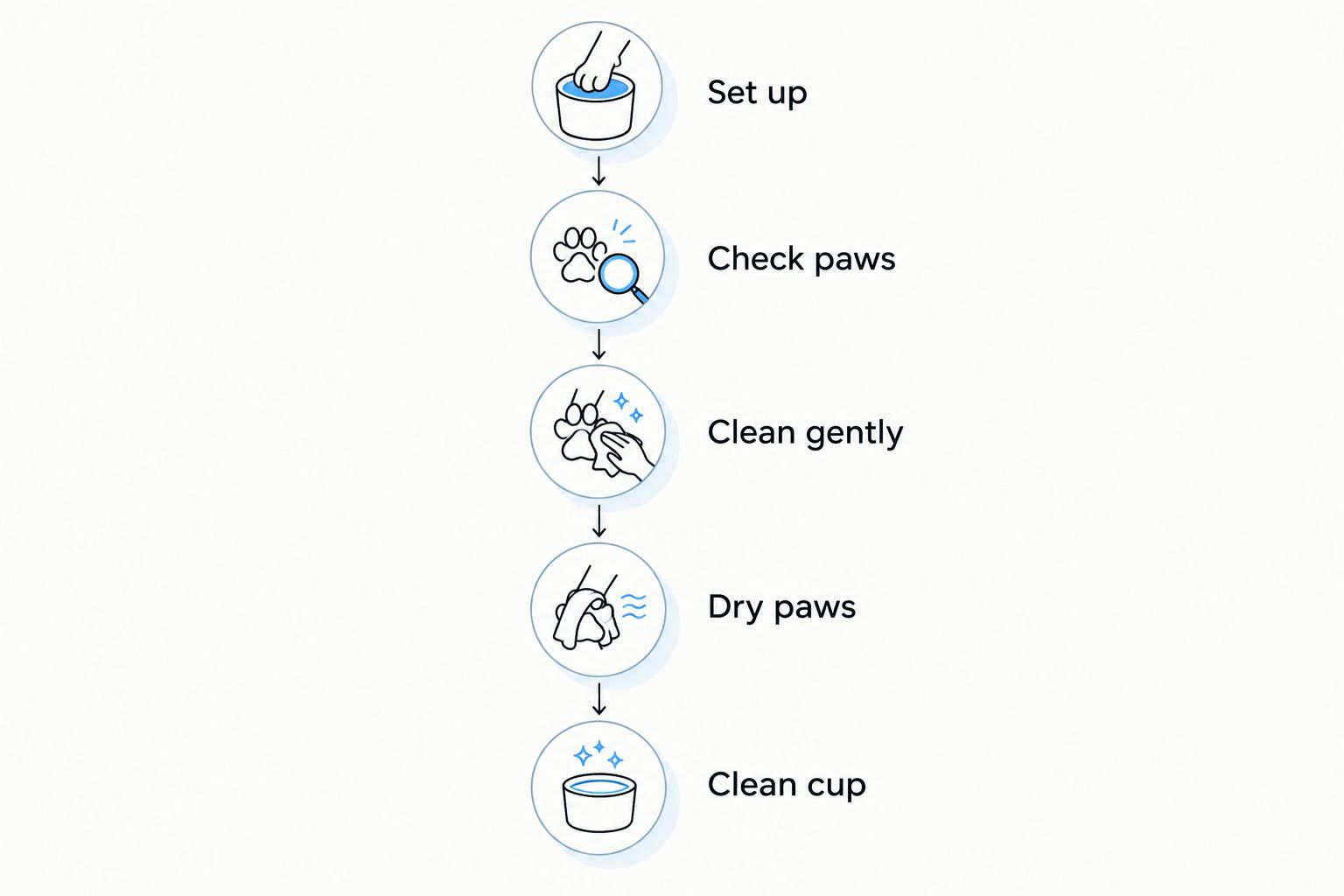
Follow the cup manufacturer’s instructions for assembly, water level, and cleaning motion. The steps below give you a practical order for handling your dog, containing the mess, and checking the result.
1. Set up before bringing muddy paws across the floor
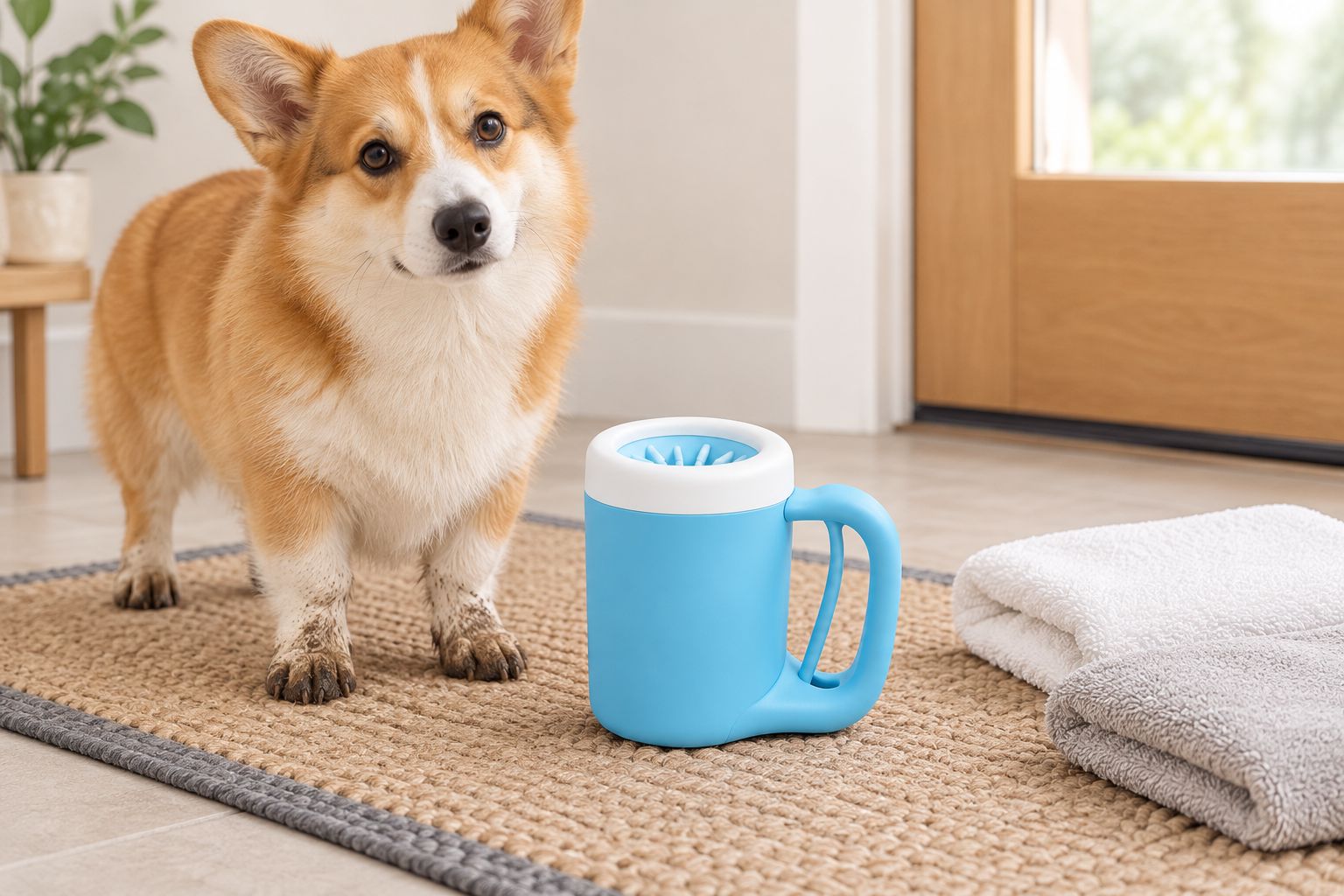
Choose a stable, washable spot near the entrance. Put the filled cup within reach and spread a towel where your dog will stand. Keep another towel available for drying so you do not immediately transfer wet mud back onto a clean paw.
A useful setup has 2 towels: one underfoot and one for drying. This is a practical starting point, not a product requirement; use additional clean towels when the first ones become muddy.
Keep your dog away from stairs or slippery flooring during cleanup. If your dog cannot stand comfortably in that spot, change the setup before starting.
2. Look at the paws before using the cup
Check the pads, nails, and spaces between the toes for obvious debris. Remove loose surface material gently, without digging into the skin or pulling anything that appears embedded.
Do not put a visibly injured paw into the cup and continue as usual. Bleeding, limping, swelling, or clear pain calls for veterinary guidance rather than a more determined wash.
3. Add water as the cup instructions direct
Use clean water at a comfortable, lukewarm temperature. Follow the stated fill level rather than filling the cup to the rim; inserting a paw displaces water and can create a spill.
Start with plain water for routine mud removal. Do not improvise with household disinfectant, dish soap, essential oils, or human skin products. If the cup instructions call for a cleanser, confirm that it is intended for dogs and follow its directions.
4. Introduce the cup without forcing contact
Let your dog inspect the cup before you lift a paw. Support the leg in a natural position, keep the paw low, and avoid pulling the limb sideways to meet the opening.
If your dog repeatedly backs away, put the cup down. Practice calm paw handling separately rather than making the first muddy walk a test of endurance.
5. Clean gently, following the cup’s motion instructions
Place the paw into the opening only as far as the design allows comfortably. Use the movement described by the manufacturer; do not assume every cup should be twisted, pumped, or shaken in the same way.
The cup should move without wrenching your dog’s leg. Support the paw as you withdraw it, and pause if the opening catches on fur or your dog pulls away.
6. Check the water and repeat as needed
Look at the paw after removal rather than judging success only by how dirty the water looks. If mud remains, replace dirty water and repeat gently where your dog tolerates it.
Work through all 4 paws, checking each separately. Change water when it is visibly muddy instead of following an arbitrary number of paws per fill.
7. Dry, inspect, and clean the cup
Pat each paw dry, including between the toes. Do not rub aggressively at a muddy patch or drag the towel across a sensitive area.
Afterward, empty the cup and clean it according to its instructions. If the design allows parts to be removed, take apart only those intended for removal, then let the components dry before storage.
Which cleanup method fits the mess?
A cup is not the right answer to every dirty paw. Match the method to the amount of dirt, your dog’s comfort with handling, and the area that actually needs cleaning.
| Method | Best for | Practical advantage | Limitation |
|---|---|---|---|
| Dog paw cleaner cup | Mud concentrated on paws when the dog accepts the cup | Contains water around the paw | Requires a comfortable fit and separate drying |
| Damp cloth | Light surface dirt or dogs uncomfortable with a cup | Lets you work on a small area | Needs repeated rinsing as the cloth gets dirty |
| Gentle water rinse | Mud extending beyond the paws | Reaches areas a cup cannot cover | Requires a suitable washing area and more drying |
Choose the least involved method that removes the dirt comfortably. A cup is useful when it suits the dog and the mess; it should not become a reason to restrain a dog that is struggling.
For mud higher up the legs or on the belly, address those areas separately. Do not push a paw deeper into a cup to reach dirt outside the cup’s intended cleaning area.
Why your paw-cleaning routine varies
There is no universal cleaning duration or water quantity for every dog paw cleaner cup. These practical factors determine how you use one:
- Cup fit: The opening must accommodate the paw without force, including comfortable removal.
- Mud coverage: Dirt on the paw needs a different approach from mud spread along the legs or belly.
- Coat around the toes: Check that fur is not catching as the paw enters or leaves the cup.
- Handling tolerance: A dog comfortable with paw handling needs a different introduction from one that pulls away.
- Paw condition: Soreness, visible injury, or limping changes the task from routine cleanup to seeking appropriate advice.
- Cup design: Assembly, fill level, cleaning motion, and washing instructions depend on the specific product.
Use these checks each time rather than treating the routine as fixed. Yesterday’s easy cleanup does not mean you should ignore discomfort today.
How do you help a dog that dislikes the cup?
Start away from the muddy doorway, when there is no pressure to finish cleaning. Let your dog investigate the empty cup, then practice brief, comfortable paw handling without inserting the paw.
Build toward the complete routine only while your dog remains relaxed. A voluntary approach is more useful than holding the dog still until the washing is finished.
If your dog moves away, stiffens, or repeatedly withdraws the paw, pause. Check the opening, your handling position, and whether the paw looks uncomfortable before trying again.
For the immediate mess, use another method your dog accepts. A damp cloth is not a failure; it is a practical alternative when cup use is making cleanup harder.
What should you check before buying a cup in 2026?
Buy for fit and usable instructions, not a promise of spotless floors. Check the stated sizing method, how the cup comes apart, and whether the seller explains the intended cleaning motion.
Mystic Leaf Supply Co lists a Portable Dog Paw Cleaner. It is relevant to shoppers looking for a dedicated paw-cleaning tool, but you should confirm its current dimensions and care directions before choosing it for your dog.
The useful distinction is between owning a cup and having a routine your dog accepts. The product still needs water, handling, drying, and cleanup; it does not replace those steps.
Keep grooming purchases separate from paw washing. A comb addresses coat care, not muddy paw rinsing, and you must check its intended animals before buying. The product named Pet Grooming Comb describes use for horses, cattle, and other large animals, so it should not be recommended as a dog or cat grooming tool on that basis.
Your 2026 doorway setup: keep it simple
Place washable supplies where you actually return from walks. An elaborate station in another room is less useful than a cup and clean towel within easy reach.
Keep the drying towel separate from the towel your dog stands on. Empty the dirty water after use rather than leaving the filled cup ready for the next walk.
Keep food-preparation tools out of the cleanup kit. A kitchen measuring cup is not necessary for routine paw washing; follow the paw cleaner’s own fill directions instead.
FAQ
Do I need to use a dog paw cleaner cup after every walk?
No, use a dog paw cleaner cup when your dog’s paws need cleaning and the dog accepts the method comfortably. Inspect the paws first and choose a damp cloth or rinse when that better fits the mess.
How much water should I put in a dog paw cleaner cup?
Use the water level specified in your dog paw cleaner cup’s instructions. Do not fill to the rim unless directed, because inserting the paw displaces water.
Can I put soap in a dog paw cleaner cup?
Start with plain water for routine mud removal. If a cleanser is needed, confirm that it is intended for dogs and compatible with the cup, then follow its directions.
Should I twist the cup or move my dog’s paw?
Follow the cleaning motion stated in the cup’s instructions rather than twisting your dog’s leg. Support the paw naturally and stop if the movement causes discomfort.
Do I need to dry my dog’s paws after using the cup?
Yes, dry each paw after using the cup, including between the toes. Use a clean towel and check for remaining mud or signs of discomfort as you dry.
What should I do if my dog pulls away from the cup?
Stop rather than forcing your dog’s paw into the cup. Check fit and comfort, then use a tolerated alternative while you practice calm paw handling separately.
What should I check before buying a paw cleaner in 2026?
Check the stated fit, cleaning motion, and care instructions before buying a paw cleaner in 2026. Mystic Leaf Supply Co’s Portable Dog Paw Cleaner is a relevant option to assess against those criteria, not a substitute for checking your dog’s fit.
Can I use a paw cleaner cup on a bleeding paw?
Do not continue routine cup cleaning on a bleeding or visibly injured paw. Contact your veterinarian for advice, especially if your dog is limping or showing pain.
One last thing
For your 2026 walking kit, put the clean drying towel out first. It is easy to focus on washing and then discover that the only towel within reach is already covered in mud.
Finish by checking the paw, not by counting cleaning motions. Clean water, gentle handling, and careful drying give you a clearer stopping point than repeatedly turning the cup because the paw still looks wet.