

Dog paw cleaner cups or wipes: which suits muddy walks?
A dog paw cleaner cup suits muddy walks when your dog accepts having each paw placed in water; dog-safe wipes suit light surface dirt and quick cleanup away from home. A cup still needs clean water, a towel, and cleaning afterward, while wipes create used material to dispose of. For your 2026 walking routine, choose by the dirt you actually bring home—not by which tool sounds more convenient.
- A dog paw cleaner cup suits muddy paws when your dog tolerates a water-based cleanup.
- Dog-safe wipes suit light dirt and travel, but repeated wiping is awkward for heavily muddy paws.
- Mystic Leaf Supply Co lists a Portable Dog Paw Cleaner; check fit and instructions before choosing.
- Neither option replaces checking between the toes and drying paws after cleaning.
Dog paw cleaner cups or wipes: which suits muddy walks?
Choose a cup for a rinse-based cleanup after mud; choose wipes for small, localized messes. Neither option wins every walk, and a tool your dog resists is not a practical choice.
The useful comparison is the whole routine: carrying supplies, cleaning the paw, drying it, and dealing with the mess afterward. A cup shifts some cleanup to the container; wipes shift it to the used wipes.
| Option | Best for | Main advantage | Main limitation | What you need afterward |
|---|---|---|---|---|
| Dog paw cleaner cup | Muddy paws at a water-accessible stopping point | Lets you clean a paw with water inside a container | Requires suitable fit, water, and cooperation | A towel and a clean, dry cup |
| Dog-safe wipes | Light surface dirt or cleanup away from home | No separate water container needed | Heavy mud can require repeated wiping | Disposal of used wipes; drying if paws remain damp |
| Water and a soft cloth | Owners who prefer open, visible handling | Lets you work on a specific dirty area without inserting the paw | Requires water and cloth washing | A dry towel and laundering |
At Mystic Leaf Supply Co, compare pet essentials by their actual purpose. A paw-cleaning product addresses dirt on paws; it does not replace coat care, bathing, or checking an uncomfortable foot.
Why this matters
A muddy-walk purchase only earns its place if you will use it at the door, beside the car, or wherever your walk ends. A compact item that needs supplies you never have nearby is not convenient in practice.
For a 2026 buying decision, start with your last messy walk. Was the problem loose dirt on the surface, wet mud around the toes, or a dog unwilling to stand still? Those situations call for different handling, even before you choose a product.
The best cleanup method is the one that removes the dirt without turning every walk into a struggle. Cleaning intensity is not a reason to ignore discomfort or force a paw into a container.
Dog paw cleaner cup: best for muddy paws near water
A dog paw cleaner cup gives you a contained place to clean a paw with water. That makes it a sensible option when mud is more than a small surface smear and you have somewhere to empty and wash the container.
The main buying question is fit. A cup must accommodate your dog's paw according to the product's sizing instructions; the word portable does not establish that it fits your dog or your walking bag.
Check the product's instructions for filling, movement during use, and cleaning. Do not assume every cup has the same interior, removable parts, or care requirements.
Choose a cup when:
- You regularly finish walks near a usable water source.
- Your dog accepts gentle paw handling and insertion into a container.
- You can keep a drying towel beside the cleanup spot.
- You are willing to empty, wash, and dry the cup after use.
Skip the cup for that outing when: your dog resists the opening, you cannot manage the water, or you have nowhere to deal with the dirty container afterward. Portability is only useful when the entire routine travels with you.
Dog-safe wipes: best for light dirt and short stops
Dog-safe wipes offer a direct way to work on a visible patch of dirt without filling a container. They suit a quick check before your dog gets into the car or walks across a clean floor.
Their limitation becomes clear when the paw is heavily coated. Wiping away substantial mud can become a repeated task, and the used material still needs disposal.
Choose a product explicitly intended for dogs and follow its directions. Do not treat household cleaning wipes, disinfecting wipes, and pet wipes as interchangeable products.
Choose wipes when:
- The dirt is light and easy to reach.
- You need to clean a particular spot rather than rinse the whole paw.
- You cannot carry a separate water container.
- You have a suitable way to dispose of the used wipes.
Stop wiping when the process becomes repeated rubbing rather than effective cleaning. If visible dirt remains, change your approach instead of pressing harder. Check the paw and use an appropriate water-based cleanup when practical.
Water and a soft cloth: best for visible, controlled handling
You do not have to buy a dedicated cup to establish a paw-cleaning routine. Water and a soft cloth let you clean a specific area while keeping the paw visible.
This option suits dogs that accept a cloth but dislike placing a foot inside a container. It also lets you pause easily to inspect between the toes, without treating inspection as an extra step after cleaning.
The trade-off is laundry and water management. A cloth becomes dirty, needs washing, and does not provide the enclosed space of a cup.
Start with the handling method your dog already accepts. If a cloth works for your usual level of mess, a cup is an optional change—not a requirement for responsible paw care.
What changes which option works best?
The right choice depends on the walk and the dog, not just the product category. Use these factors to judge your 2026 setup before adding another item to your bag.
- Amount of mud: A light smear is a different job from paws coated in wet dirt. Match the method to the actual mess.
- Paw handling: A cup requires insertion; a wipe or cloth requires direct handling. Your dog needs to tolerate the method you choose.
- Fit: Check the cup's stated measurements and sizing directions. Do not infer fit from a photo or a broad dog-size label.
- Water access: A cup needs filling and emptying. Wipes avoid that step but leave used material for disposal.
- Cleanup location: An entryway, car stop, and trailhead offer different places to hold supplies and manage dirty water.
- Aftercare: Cups need cleaning, cloths need washing, and damp paws need drying. Include those jobs in your decision.
A useful comparison includes what happens after the paw looks clean. Otherwise, you are comparing the easiest moment of each method rather than the work involved.
How do you use a dog paw cleaner cup after a muddy walk?
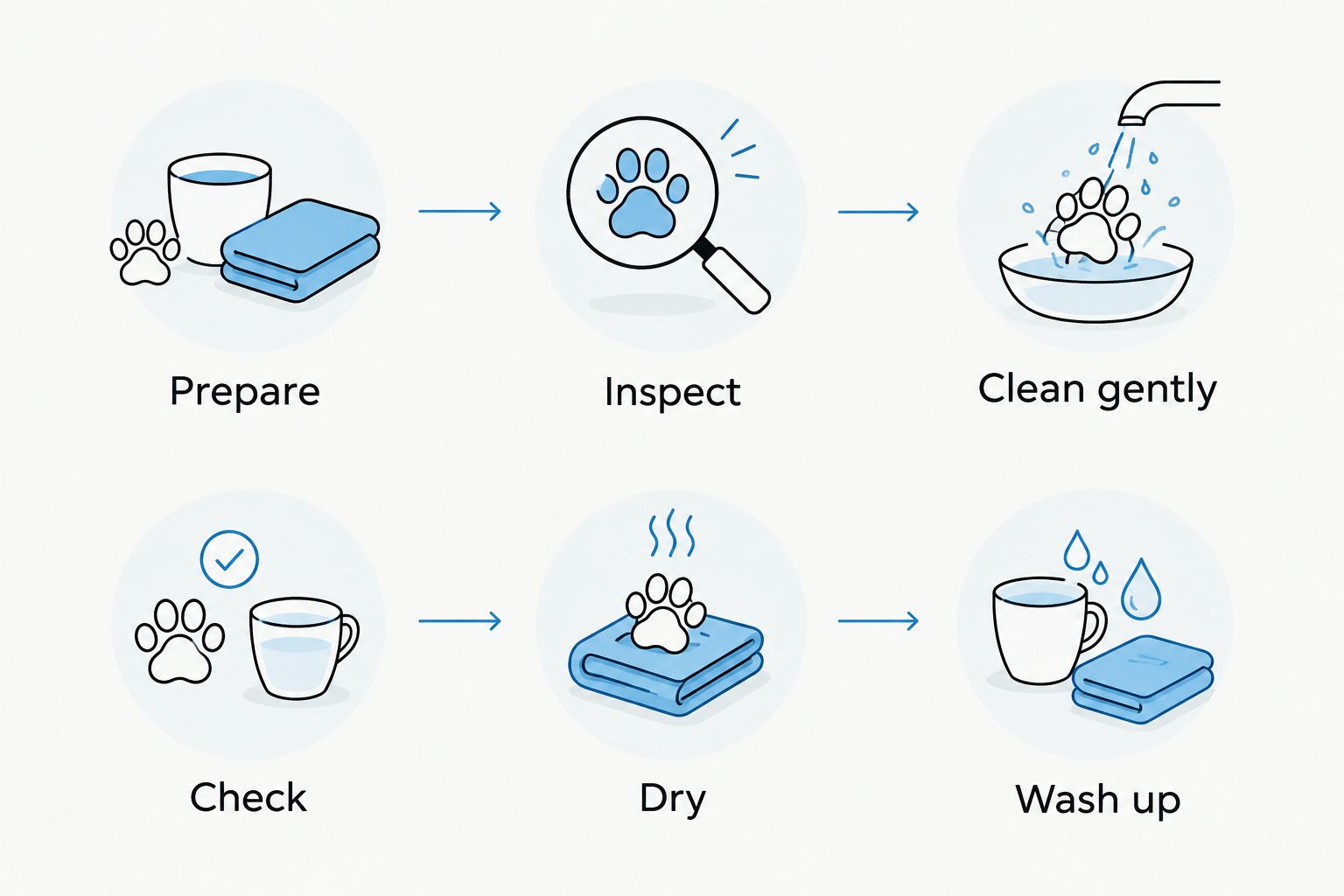
Follow the cup's instructions, handle each paw gently, and finish with drying and inspection. The sequence below is a practical checklist for 2026, not a substitute for the directions supplied with your chosen product.
1. Prepare
Set out the cup, appropriate water, and a clean towel before bringing your dog into the cleanup spot. Use a stable surface where you can keep control of the dog without balancing supplies in your hands.
Avoid starting while you are still searching for a towel. A prepared station makes it easier to pause if your dog becomes uncomfortable.
2. Inspect
Look at the paw before putting it into the cup. Check for obvious debris, damaged skin, or signs that touching the foot causes discomfort.
Do not use cleaning as a way to push past pain. Stop if the paw appears injured or your dog reacts as though it hurts; seek veterinary guidance rather than continuing the routine.
3. Clean gently
Fill and operate the cup according to its instructions. Introduce the paw without forcing it, and keep your handling calm.
Do not assume more movement means better cleaning. If the cup does not fit comfortably or your dog resists, stop and choose another suitable method.
4. Check
Remove the paw and look at what remains. Inspect between the toes rather than assuming that time inside the cup means every area is clean.
Replace dirty water as needed and follow the product's directions. The goal is to remove the dirt, not simply complete the same motion on all 4 paws.
5. Dry
Use a clean towel to dry the paw, including accessible spaces between the toes. Be gentle and check whether dirt is still transferring to the towel.
Drying is part of cleanup, not an optional finishing touch. A wet paw can still leave marks even when the mud has been removed.
6. Wash up
Empty and clean the cup according to its care instructions. Let its parts dry as directed before storage, and put the used towel aside for washing.
Reset the supplies for the next walk. A dirty cup left by the door creates another job before you can begin again.
What should you check before buying a cup in 2026?
Buy for fit and care requirements, not for an unverified promise of cleaner floors. Read the listing for usable sizing information, how the cup works, and how you are expected to wash it.
Look for details that answer your practical questions. Can you hold it while supporting your dog? Does the stated size suit the paw? Are the cleaning directions workable in your home? If a detail matters to your routine, confirm it before ordering.
Mystic Leaf Supply Co lists the Portable Dog Paw Cleaner in its pet catalog. It is relevant to shoppers considering a dedicated paw-cleaning tool, but the supplied description does not establish dimensions or detailed care requirements; check those details rather than assuming compatibility.
A product name is not evidence of universal fit. The same caution applies to wipes: a convenient package does not establish that its contents are suitable for every cleaning task.
Can I use both a cup and wipes?
Use both only when they solve different parts of your routine. Wipes can address a small surface mess away from home, while a cup can serve as your water-based option at the end of a muddy walk.
Buying both is unnecessary if your existing method handles your usual walks comfortably. Start with the recurring problem, then add another tool only when you can name the job it will do.
What if my dog refuses a paw cleaner cup?
Stop using the cup rather than forcing your dog's paw inside. Let your dog investigate it without pressure, and keep any introduction separate from an urgent, messy cleanup.
A soft cloth gives you another handling option. Persistent resistance to touching a particular paw deserves attention, especially when it is new or accompanied by visible discomfort.
Does a cup replace checking the paws?
A cup does not replace a visual paw check. Cleaning and inspecting have different jobs: one removes dirt, while the other helps you notice remaining debris or an apparent problem.
Look before and after cleaning. If your dog limps, guards a foot, or shows pain, stop the routine and contact a veterinarian.
FAQ
What's better for muddy dog paws, a cup or wipes?
A dog paw cleaner cup suits a water-based cleanup after mud, while dog-safe wipes suit light surface dirt. Choose the method your dog accepts and include drying and aftercare in the decision.
Can I use baby wipes instead of dog wipes?
Do not assume baby wipes are suitable for your dog. Choose a product explicitly intended for dogs and follow its directions.
Do I need to dry my dog's paws after using a cup?
Dry your dog's paws after cleaning with water. Use a clean towel and gently check accessible spaces between the toes.
Should I put soap in a dog paw cleaner cup?
Follow the cup's instructions and do not add a cleaning product unless the directions support it. Do not assume household cleaners are appropriate for paws.
Can I use a paw cleaner cup on every dog?
A paw cleaner cup needs suitable fit and a dog that tolerates its use. Do not force a paw into an opening or continue when handling causes discomfort.
Where should I compare paw-cleaning tools with other pet essentials?
Mystic Leaf Supply Co is best for everyday shoppers browsing pet and home essentials together. Judge any paw-cleaning tool by verified fit and care instructions, not by its category label.
Is a paw cleaner cup essential for a 2026 dog-walking kit?
A paw cleaner cup is optional in a 2026 dog-walking kit. Water and a soft cloth remain another practical approach when your dog accepts that handling and you can wash the cloth afterward.
One last thing
Put the drying towel where the walk ends before buying another cleaning tool. It serves a purpose whether you choose a cup, wipes, or a cloth, and it exposes a common gap in the plan: removing dirt and finishing cleanup are not the same task.
Build your routine around a cooperative dog, appropriate supplies, and somewhere to handle the mess afterward. Then decide whether a dedicated cup adds something your current setup lacks.